Showing posts with label portuguese products. Show all posts

Portuguese wine, where have you been hiding?

Liking portuguese wines seems to be a trend right now, amongst the wine lovers, critics and general press overseas. Portugal was the dorky kid with glasses and who was always trying to hang with the cool kids but never really did, but not anymore. Now, people are favoring dry, unique wines that could be Portugal road to success.
Over the last two years, portuguese wines have collected various awards and high scores in international magazines and have been complimented by the critics and wine enthusiasts everywhere; as a consequence the exports numbers grew. 

In March, last year, Matt Kramer from the magazine Wine Spectator let his readers know that he and he’s family had moved to Portugal because it is here that one could find “the most exciting wine on the planet”. Dave McIntyre, from the Washigton Post affirms that he likes to shock people, whenever he’s asked to name a list of the wine he likes the most: “I like to surprise them and put Portugal right on the top of that list”.

Douro's wine landscape
Image Credits

Portugal is cool, Portuguese wines are cooler.

Portuguese wines have been around for years, why just now?

Because the wine market is tired, oversaturated and in desperate need of different experiences, for which the standardized wines of the new world countries don’t seem to be the answer.  From 2012 to 2013, the records show that the wine exports in the European countries have risen a 2.4%, while in the New World markets the exports have fallen, with countries like Australia and Argentina suffering major losses in their sales.

So, portuguese wine has now the right opportunity to stand out. Due to its unique characteristics: the know-how of its people, the great diversity of terroir, Mediterranean regions, mountains in the north and the plains down south and it overall genetics, portuguese wine becomes the richest viticulture on this planet.


A breath of freash air
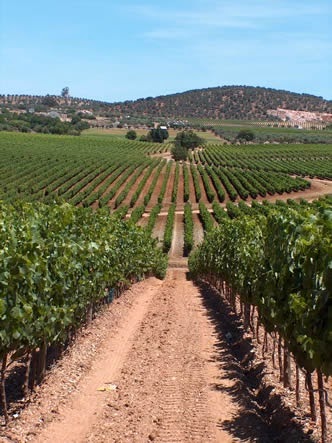
Alentejo wine's country
Image Credits
But Portugal is not a country of varietal wines, according to Portuguese Master of Wine, João Pires, what truly counts here is the blend.  Portugal needs to bet on producing unique wines, wines that have a personality and that may not fall in a Robert Parker’s category constrains, but are still great.

The wine market trend is to look beyond these kinds of standardized wines, “wine connoisseurs and lovers want to taste more of the dry and less extracted wines” says the Portuguese Master of Wine.


Portugal has to seizes this trend and take full advantage of its unique DNA and the capacity its wines have of surprising the entire world.

Promotion of portuguese products will be funded by the EU

The European Commission has approved 20 initiatives to promote agricultural products inside and outside the community. Portuguese wine and olive oil will receive 851 thousand € from Brussels.

The 20 approved programs will enjoy a budget of 46 million euros, half of that will be funded by the European Union. Two actions to promote portuguese products got the green light from the European Community to receive the funding required for its realization. They will receive the amount of more than $ 1.6 million, 851 thousand € of which, will come directly from Brussels.

European Union will fund the promotion of portuguese wine
Image Credits

As to the portuguese programs, the Association of Port Wine, responsible for the promotion of this wine on the domestic market, will receive a total of 281.780 euros. The other action promoting portuguese products focuses on olive oil and was developed by Alentejo Regional Wine Commission and Casa do Azeite. This action will take on as a main objective the markets of Germany, UK, Sweden, Poland and the domestic market, also. The two programs will have a total of almost € 1.4 million, approximately 681 euros of which are EU funds.

The 20 programs were selected from a set of 33 projects submitted by November 30, 2013 and were a part of the first wave of presentations within the system of information and promotion of agricultural products, for the year 2014. Such actions will take place over the period of 3 years.


Programs will highlight the specific advantages of EU products related to criteria such as quality, health and safety. According to the European Union, all of the actions were aimed at promoting organic products, wine, milk, flowers, products made from cereals and rice and even products classified as PDO (Protected Denomination of Origin) or PGI (Protected Geografical Indication). The promotion of campaigns outside the limits of the EU, will aim to reach  North America, Russia, China, Middle East, Southeast Asia, India and Turkey markets.

New record for wine exports

Portuguese wine exports grew by 2.4 % in 2013, setting a new national record of 724 million of euros, according to the president of the Instituto da Vinha e do Vinho in the inaugural conference of Uva d’Ouro.

This growth has encouraged domestic wine producers and distributors to participate in international events in order to establish a connection with potential importers and as a way to boost the appreciation of "Made in Portugal” wines. “Despite the fall in domestic consumption, it did not affect exports and the image of Portuguese wine out there", explained the president of the IVV, Frederico Falcão.

Barriers to export

China is an emergent market for portuguese wine
Image Credits
Excluding the usual cultural barriers, the president of IVV explained that exporting requires an investment of time and capital. "You have to know the market, establish trusts, measure the result of actions, all of this could take years," recalls Frederick Falcão.

Manuela Cabral, president of the Douro and Porto Wine Institute emphasizes the cultural barriers and the different forms of closing a deal in, for example, eastern markets. There is a need to study these cultures and to find a way to make them more receptive to western products. "These different realities can be beneficial because when a wine is well known recognized in a certain country could pave the way for other portuguese wine" claims the president “and could even pave the way for other portuguese products and wine tourism too".

Relevant domestic consumption

The domestic consumption of wine fell by 5 % in Portugal especially with the decreasing sales in the horeca channel and the retail trade. "The portuguese consumer is on a basic state" said the chairman, Manuela Cabral, “but it has potential to grow."

Producers and distributors have not lost sight of trends in the domestic consumption. Despite being a sector hit by the economic crisis, about 77 % of wine sales take place in supermarkets and 33 % of retail sales are done in the format of bag in box. The president of the Douro and Port Wine Institute also noted that portuguese consumers are sensitive to consumer promotional activities.

Strengthening the Portugal brand

Sonae, together with various media organs, organized the Uva d’ouro iniciative that aims to meet the existing need of the customer to easily identify award winning wines on the shelves of supermarkets. The experience had a positive return for Sonae which saw sales increase once the awarded wines were easily identifiable.

"Wine’s category is one of the most important for a chain of hypermarkets because it’s one that creates very strong emotional bonds with customers," reinforce João Paulo, Marketing Director of Sonae. “We already know that the portuguese wine has great quality and we appreciate it” he adds further, “the creation of strong brands, as we are doing, has an important part in improving the brand 'Portugal', out there".